Monday, January 15, 2007

How to choose a great outfitter!

Introduction

The last several years, I had the pleasure of being an outfitter in Idaho and Montana. I spent a majority of my time on the phone and a portion of my time in the field. I have talked with literally thousands of hunters over the last several years and I have answered literally tens of thousands of questions about hunting elk, mule deer, whitetail and spring bear. The following advise comes from all of these hunters and also my own quests to find great outfitters and great trips to pursue my own dreams of chasing trophy quality animals with first class outfitters and first class people. My definition of a first class outfitter is more about attitude then anything else, but sometimes everything else is just as important. The following is a list of ideas and questions that you should be thinking about.

Species/Type of Hunt

My first advice that I offer you will be to choose the species and the type of hunt you are looking for first and foremost. Do you want a whitetail hunt out of a lodge, or a backcountry elk hunt 20 miles from the nearest road? Are you looking for an arctic adventure chasing Musk Oxen or Polar bear in the frozen north or are you looking for a spring bear hunt for that 400lb black bear? Are you looking for a combination hunt for several species. Define what it is that you are looking for and only seek out specifically what it is that you want.

The type of hunt you are looking for and the conditions of that hunt are the first questions you want to ask yourself before you step out into the world to look for an outfitter. Do you want a lodge hunt where you have warm showers or are you willing to stay in a tent in the backcountry with no running water and a stream to bath in? Are you willing to ride a horse? Are you willing to fly in to a remote location? Remember, this is your hunt, and you are paying for the opportunity to take a big game trophy in the conditions and the manner in which you desire. Are you willing to deal with bugs, heat, snow, rain and altitude in your quest? Are you looking for a hard hunt or an easy hunt? What is it that you desire for your dream hunt?

Define a Trophy

Define early what you consider a trophy. Are you looking for an average deer or elk? Are you hunting for the meat from the animal or are you looking for that Boone & Crockett or Pope & Young trophy of your dreams? Define early what you would be willing to take on the first several days of your hunt? Define the minimum you are willing to take on the last day of your hunt? If you have the opportunity to take some time and look at various pictures of the animals that you are seeking and define exactly what it is that you are looking for? An example of this would be that with elk I define a trophy with a rifle as anything over a 300 class Boone & Crockett bull, but with a bow I would be willing to take any good bull and it would be a trophy to me.

Physical Conditioning

Define early what your personal conditioning and be very accepting of exactly where you are personally in your physical fitness? Are you already in shape enough to hunt the species you are looking for? Do you need to get in shape for your specific hunt? Are you willing to do the work to get in shape for your hunt? Is the hunt out of your range of physical fitness? These are specific questions that only you and your doctor can really hope to answer. These types of questions are sometimes hard to answer yourself and you may want to elicit the advise of others about your physical conditioning. I always recommend that any hunter over the age of 35 take a prehunt physical and create a work out regiment early in the year to gear up for a hard back country hunt.

Finances

Know exactly what it is that you are willing to spend on a hunt. Be very accepting of exactly what your budget is for the type of hunt you are willing to do. Are you willing to accept a budget hunt where you may save a few dollars and fore go a few amenities, or are you willing to wait until you have the budget to afford the right outfitter and the right hunt for what you are seeking? Be honest with yourself about what you are willing to accept.

Practice

Are you willing to put in enough time to do the practice necessary to be successful on your hunt? It always baffles me to see hunters come in to camp who have spent big money to come in and go hunting who have not taken the time to practice with their bows or rifles. The opportunity to take your trophy of a lifetime can sometimes happen in a matter of seconds. The choice for success in the field at the moment of the shot is truly yours. Are you willing to make the time to practice the weapon of your choice to be a great shot? If you are willing to practice, are you willing to practice in all kinds of conditions and all kinds of distances? Are you willing to push yourself in your practice to shoot at distances that are outside of your comfort zone?

Choosing an Outfitter

There are 4 options for you to pick out an outfitter these days.

• Ask a friend who has hunted with an outfitter.
• Use the Internet to research outfitters
• Attend your local outdoor shows
• Elicit the help of a booking agent

All four have advantages and disadvantages and the following set of questions and advice should assist you in researching the hunt of a lifetime.

Friends and Family

Friends and family can be a great source of trusted advice about where to go hunting and what to expect from outfitters. These are sources that you know and who know you and can give you honest information about where you might be happy hunting. The only disadvantage is that sometimes friends and family will steer you onto an outfitter so that they can get a discount hunt with that outfitter or make a recommendation about where they went five years ago and the conditions in that area have changed dramatically. If a friend of yours recommends an outfitter by all means check them out, just do your due diligence just like you would if you knew nothing about the outfitter.


The Wild Wild Web

The wild web can be a wonderful resource to search out an outfitter as well. There are some really great resources on the web to find a great outfitter and the advantage is that you can really take your time to do your homework on the outfitter and seek out specifically the trip of your dreams. Most reputable outfitters have a web site and keep it updated on a regular basis. That being said, I know some great outfitters who in the field I would be willing to follow to the ends of the earth, and yet on the web they look absolutely like a joke. As someone who is here to give you some advice on what to look for the only answer I can say is always judge a book by its cover and never judge a book by its cover. Always be willing to check out every source you can do your due diligence in checking each and every outfitter you can.

In seeking outfitters out on the wild web, I look first for the species and I research everything I can about them. In looking for a moose hunt for the fall of 2008, I have spent several hours looking at research on moose. I then picked a region that I wanted to hunt that was within my budget. I knew I was not ready to hunt Alaska as it was outside my current budget so I chose to look at Newfoundland, Canada. Newfoundland has a herd size of almost 130,000 moose in the region and the outfitters there are within my budget range. I then looked at pictures of all of the moose that I could find that were taken in 2006. I decided what I would consider a trophy from all of the pictures that I saw of moose taken in that region. I am personally looking for a moose over 40 inches wide with very wide palms. I am wiling to spend 10 days hunting for this trophy and I wanted the option of taking a caribou or bear if I stumbled upon a nice one. I then found a list of all of the outfitters offering trips that were of this caliber and looked them each up on the web. I then emailed all of them and asked for a list of 10 references from 2006 and a brochure and pricing and a copy of their contracts. Once I get the time to make the calls and check all of the references I will narrow it down to two or three outfitters and then get on the phone with them and make a choice.

Outdoor Shows

Outdoor shows can be a great place to find outfitters. I have found some wonderful outfitters by cruising the aisles of the various outdoor shows that are out there. Before attending a show, I usually look at the exhibitor list before I attend and look the outfitter up on the web and try and get a list of references for that outfitter first. I then check the references and go with a plan in mind. I also am always open to talking to any outfitter I find at these shows because sometimes personality and attitude play into my decisions on who I choose. When looking for a hunt, I am always open to hearing what someone has to say. That being said, there are some caveats to seeking out an outfitter at the various shows that are out there.

Outdoor shows can be another great place to find outfitters to fill your needs. I have found some very good outfitters by browsing the aisles of outdoor shows. Some points to remember when talking with outfitters at an outdoor show are:

• Don’t judge an outfitter just by the display of racks in his booth or his pictures. They may or may not be a good representation of what they have to offer.
• Always talk to the outfitter himself and not just the guide who is there at the show.
• Get a feel for the outfitters favorite type of hunting and find out if it matches what you are looking for.
• Ask about the experience of his team and the scouting his team does pre-season.
• Ask for a list of references on the spot.
• If this outfitter is offering a show deal that you are interested in, and you want to get in on this deal, ask him for 7 days to check his references and have him put it all in writing.
• ALWAYS check his references!!!!!
• Ask questions, everything you can come up with! If the outfitter is busy, be willing to ask him to make an appointment to spend 20 to 30 minutes with you after the show or have him call you later in the evening.
• Remember that the outfitter want to talk to as many people as possible so have your list of questions ready and don’t waste his time if you are not interested in truly booking a hunt. Don’t be a tire kicker, unless your willing to purchase.
• Ask about success rates and opportunity rates for the game you are seeking.
• Ask if there are any trophy fees or hidden fees.
• Ask about trophy preparation and meat care.
• Ask about group rates and/or bringing a friend or cameraperson.
• Always be very honest with him about your expectations and your physical limitations and demands for your hunt. Will he work with you or is the outfitter dismissive about your concerns?
• Ask about tipping his staff and what their expectations are for a successful and unsuccessful hunt.

Booking Agents

I personally have used booking agents for specific types of hunts where I did not know very well the species that I wanted to hunt, or did not have the personal time to really get out there and do the research. I believe there are some really great booking agents out there and there are some really horrible booking agents out there. Just like anything in life, you need to check their references. My personal advise is that if you are just looking for one hunt of a lifetime, you take the time and do the research yourself as it is a part of your entire hunting experience. If you are going to be booking hunts every year or every couple of years, booking agents can be really great resources. I am personally a fan of the kind of booking agent who can assist you in finding great areas to apply and will assist you in the entire application process and assist you in building preference points for preferred species in trophy areas.

Attitude

The difference between a successful hunt and an unsuccessful trip often boils down to attitude. Sometimes it is the attitude of the outfitter and the guides that makes or breaks a trip for a client but more often then not it is the attitude of the client that makes or breaks a trip. Your attitude on every day of your trip can be the extra boost that you need to be successful. Whether you are sitting on a whitetail stand or running up the mountain chasing a bugling elk it is your happy positive attitude that will help you get there. Remember, you are out there for the adventure, to be in the wild, for the thrill of the hunt. After several years of outfitting I can honestly state that those that came into camp with a positive can do attitude always left camp happy and relaxed whether they got game or not. These hunters took tons of pictures, had fun and learned about themselves and the animals they were pursuing. They made friends with the other hunters and the guides and if they got lucky and got a trophy they smiled even larger then they had all week.

My favorite trip into the wild was with an outfitter in Idaho. For that week we both had such a contagious attitude that we were going to run into the elk of our dreams that we pushed each other to the ends of the territory and covered over 100 miles on horses and on foot in the week. We never saw an elk in all 7 days but I never had more fun. During the week the temperature continued to drop and ultimately the snow fell to a total of 27 inches. On the way off the mountain on the final night of the hunt, we were all yelling into the mountains, “It just doesn’t get any better!” and we truly meant it.. It was the trip of a lifetime!!!

Tipping

Tipping is a choice that hunters make to pay for the extra service for that you receive from the guides that help to make your trip successful. Guides from reputable outfitters should be paid very well and should not have to rely upon tips to survive. Tips are an added bonus and certainly are appreciated by the guides, packers and the cooks. A general rule of thumb is that 5- 15 percent of the hunt price is a more then a fair rule for hunting with the 15 percent going for truly exceptional service that was above and beyond in every way possible.

Questions to ask the outfitters you are considering.

• What types of hunts do you offer?
• How experienced are the guides?
• How many hunters per guide?
• Will my group be split up?
• Could I be added to another group?
• What is the entire cost of the trip including all license fees, access fees and additional trophy fees?
• What deposit is required?
• What is the cancellation policy?
• Can you provide me with a copy of your contract?
• What methods of payment do you accept?
• Do you provide any references or referrals from other clients? • May I call them?
(If the answer is no here, hang up the phone and do not book
a trip with this outfitter)
• Do you furnish transportation from the airport, or must I?
• What type of transportation is provided?
• How far is the nearest airport?
• What airlines service that airport?
• Will I be need to rent a car?
• Where will I be staying? Lodge, hotel, tent, etc...
• How many guests to a room or tent?
• Can my group share a room or tent?
• What is supplied? Food, sleeping bag, linens, electricity, etc...
• What meals, if any, are provided?
• What is the quality of the food? Sandwiches and chips or grilled steak and steamed veggies?
• How do you handle clients with special dietary needs?
• Is alcohol allowed?
• Are the guides and staff allowed to drink?
• How much travel is involved from the lodge to the hunting area?
• How has the hunting been lately?
• What game have you been seeing?
• What was your largest animal taken last year during archery
and rifle season?
• Have they been active?
• When is the peak of the rut for your area?
• What type of weapons can be used?
• How large of an area will I be hunting?
• What are your success statistics for the type of hunt I am interested in booking?
• Who cares for the game?
• Who will be responsible for butchering?
• Is there a local taxidermist I can call or do I need to make arrangements to bring the game home?
• Who obtains the license?
• Will you be providing me a copy of the game and fish regulations
• Can it be purchased locally?
• How much are the tags and license fees?
• Can ammunition be purchased locally?
• Will I be able to site in my weapon?
• What physical condition must I be in?
• Is this a fully guided hunt?
• What kind of weather must I prepare for?
• What kind of camo is best for your area?
• Do your guides all carry maps and gps units?
• Do you have a satellite phone in each camp?
• Will I have access to the phone if need be for a fee?
• What are your safety regulations?
• Can you provide me a list of your gear recommendations?
• How much gear am I allowed to bring into camp?

This is an ever growing list of questions, please do not hesitate to ask any questions that you feel are necessary to know the answers to assist you in making the right decision in choosing your outfitter.

Questions to ask references about the outfitter you are considering.

• Would you hunt with this outfitter again?
(If the following question is no, do not book with this outfitter)
• What was your hunting trip like with this outfitter?
• Did you get an opportunity for a shot at game?
• If you were picked up at an airport, how was the service? Was the outfitter on time?
• Were you allowed to site in your rifle before the hunt? Did the outfitter have an archery target in camp for daily practice?
• Were the accommodations clean and organized or was the camp run smoothly and efficiently?
• Was the outfitter prepared to put you on game the first morning of your hunt? Did they know the area and where the game was?
• Was the outfitter prompt in picking you up from a hunting site at the end of a morning or evening?
• What was the quality of the food? Was there enough to go around?
• Did you have access to showers and clean toilets?
• What were game populations like?
• What was trophy quality like and did you see quality animals?
• Did trophy quality match your expectations?
• How would you rate the guide's experience and knowledge of the land you hunted?
• How would you rate the guide's hunting skills?
• Did the outfitter run a safe operation and did you feel safe? Was there first aid kits readily available? Was there a safety plan in place?
• Did you feel this outfitter ran a law abiding operation? Were all game laws followed?
• What was the success rate while you were in camp?
• If you were the outfitter what one improvement would you make?, what would it be?
• Who specifically was your guide and cook? How long had they been working for the outfitter?
• Do you know the name of another hunter in camp I might call?

A couple of Mexico Muleys


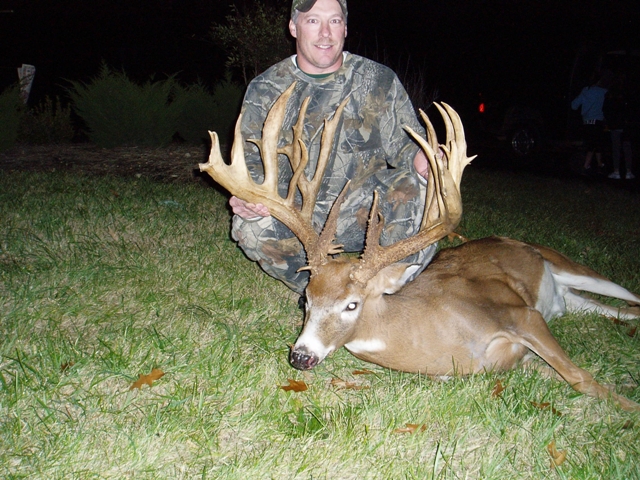
The first hunter is Bill MacFarland and the second hunter is one lucky man! These are two magnificent bucks. I have been reading the famed stories all of my life of Jack O'Connor and someday I am going to take my beautiful 270 down to Mexico and find me one of these giant Muleys!

Thursday, January 11, 2007

A quick joke!

A man owned a small ranch in Montana. The Montana Wage & Hour Dept
claimed he was not paying proper wages to his help and sent an agent out
to interview him. "I need a list of your employees and how much you pay
them," demanded the agent.
"Well," replied the rancher, "There's my ranch hand who's been with me for 3 years. I pay him $600 a week plus free room and board.
The cook has been here for 18 months, and I pay her $500 per week plus free room and board.
Then there's the half-wit who works about 18 hours every day and does about 90% of all the work around here. He makes about $10 per week, pays his own room and board and I buy him a bottle of bourbon every Saturday night."
"That's the guy I want to talk to, the half-wit," says the agent.

"That would be me," replied the rancher.

Sunday, January 07, 2007

Physical Fitness and Hunting

Today, I started my workouts again and I am already sore. Physical fitness plays a major role in whether you are going to be successful for big western game. I am still unsure as to where I am going hunting this fall. I am waiting for Dennis to make up his mind as to whether he wants to go after moose, elk, bear, mule deer or antelope.

Either way, I am out of shape. Nineteen years ago, I did one of the stupidest things I could ever do and started smoking. This last year in Idaho, I really felt the damage that it has done to my lungs and my body. Part of it is that I am getting to be a bit older now as I am about to celebrate my 37th birthday at the end of this month. My goal is to get back in the gym and quit smoking.

My schedule for January is going to keep me very busy but I am determined to spend 45 minutes in the gym as often as I can. My workout today consisted of 20 minutes on the treadmill and 25 minutes of free weights. I usually hit the treadmill or elipticals first to build up my heart rate and then get in some abs work and then chest,shoulders and arms. Working your legs and calves are important because you will be carrying a lot of weight while you are hunting out west, but the main thing you can work on is is your cardio and aerobic fitness level. If your gym has a stair climber, these are probably very similar to what you will have while climbing a mountain.

If you are planning a big game fall hunt, the time to start your routine for training is now. As you get closer to your hunt, fill your pack with your gear and put it on your shoulders and get in 2-4 miles per day for about 3 weeks before your hunt. About 5 days before your hunt, stop training and rest up your body so that you will be prepared for your hunt. Do however keep stretching and eating well. More about fitness levels to come.

BULL PACS


Bull Pac's have been around for awhile now and I am a big fan of these frame packs. I have seen them in action this last year in Idaho and they are comfortable, tough and worth the money you will spend on them. Their website could be a little better but they probably spent all of the money on the development and quality of their equipment. They are also strong supporters of the Rocky Mountain Elk Foundation. Check out their link at: BullPac's Online.

Whitetail Photo


Originally uploaded by t h e Crow Hand.
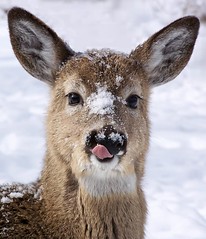
I love the the taste of fresh snow. Looks like this doe does too! Great shot by the Crow Hand.

Friday, January 05, 2007

Coyote Hunting

This looks like fun!

Pennsylvania Trappers Assoc District 7 coyote Hunt - Feb 3-5 PA
For more information, contact Joe Mast at (570) 568-0175 or Dave Strack at (570) 924-3505.

Good Article on Deer and Auto Accidents.

I opened up my USA Today and saw a great article on deer and auto accidents today. The link is at: USA TODAY. The article in the print version had the numbers and a really great graph on the number of accidents per state. A couple of states listed that were really high were Pennsylvania with 18,846 auto collisions and deer, Michigan was second with 13,108, Illinois was third with 12,003, Ohio was fourth with 10,480, Georgia fifth with 9406, and Virginia was sixth at 8256. Of course with the lease amount of deer collisions was Hawaii with 12, and DC had 61 for July 1st, 2005 through June 30th, 2006.

Now what they don't tell you in this article is the number of deer that are hit by large semi-trucks that never get reported, and or the number of collisions that do not get reported to the insurance companies. They did state that the average amount for a crash with a deer was $2800.00 and over $10,000 if there was injury to the driver.

Monday, January 01, 2007

Link to all State Game and Fish organizations

The following link provided by the National Rifle Association gives you a page in which you can research the state game and fish laws of every state in the United States of America, as well as links to Hunter Safety Education!

Please check it out at: STATE GAME AND FISH LINKS

It's About Time Massachusetts!

Course on weapon safety needed for hunting license

Come Jan.1, Massachusetts will join 49 other states in requiring new hunters to pass a basic course covering the safe handling of weapons and some of the ground rules for the sport before issuing them a license.

The requirement is part of a new law passed this year. Any adult who plans to purchase a hunting or sporting license (the combined hunting and fishing license) must show either one of the following documents: a government-issued certificate from any state, Canada, or Mexico, showing that they have passed a basic hunter education course; or a previous hunting or sporting license from any state, Canada or Mexico. A state-issued firearms identification card or license to carry handguns will no longer be acceptable for purchasing a hunting license.

All minors (those aged 15-17) seeking a license must produce: a basic hunter-education certificate and a letter of consent allowing the minor to hunt from a parent or guardian; or, a consent letter which additionally says that the minor will be accompanied at all times by a licensed adult while hunting.

The good news is that there are about 300 volunteer instructors geared up and ready to teach the required courses. The average instructor has about 10 years of experience with the state’s hunter-education program and most have extensive hunting and survival skills. The state Division of Fisheries and Wildlife has come up with several very flexible formats for the 15-16 hour course; some are available weekday evenings, others on weekends, and a few combine a weekday evening with weekend days. The courses are held throughout the state.

“We really want people to push for the winter-spring courses,” said Susan Langlois, administrator of the hunter-education course for MassWildlife.

“The earlier they take the course, the easier it is for them to meet all of the requirements before hunting.”

New hunters, Langlois said, often don’t recognize the need for a long time line before actually getting out in the field.

“By completing a course early in the year, new hunters have time to apply for firearms licenses, practice newly acquired skills and scout potential hunting locations,” Langlois said.

The state courses are free, as the program costs are financed by the state license purchases of other sportsmen and women and funds that come to the state from federal excise taxes on firearms and archery equipment.

The course schedule is listed on the Web at www.masswildlife.org. For further information, call the hunter-education program at: (978) 632-7648.

Saturday, December 30, 2006

2006 was just one of those years!!!!!

2006 was just a little bit on the pathetic side, kind of like this big bruiser.. A bit on the pathetic side. I really really really am looking forward to the first day of 2007 to get a fresh start on a new year with a ton of possibilities in front of me!

Nuff Said!

The MacFarland Buck!

This late season bruiser was taken just last night by Bill MacFarland of Limerick, PA. Bill is on his way to Sonora, Mexico to hunt big bruiser mule deer so I cannot wait to see the next pictures he sends in about a week. This was deer number two that Bill was chasing and deer number one was apparently much much bigger! Either way, he looks like a great buck.

Bill runs a great booking agency for hunters planning trips all over the world, you can take a look at his website at: MacFarland Adventures

Thursday, December 28, 2006

Open Creek Outfitters


Some day I am going to get the opportunity to hunt with this outfitter. Rifle hunting in the rut in Wyoming...Sure does sound good! Please check out Open Creek Outfitters I know one of the guides and he is a class act! If you are interested, call quickly if you are looking for elk! The next time I catch up with him, I will get some photos from the 2006 season. Their biggest bull this year was a 384 bull Boone & Crockett. VERY IMPRESSIVE!!!!!

Wednesday, December 27, 2006

Virginia Sport Show

I am really looking forward to the Harrisburg, VA Sport Show in February. I am getting the opportunity to speak about two of my passions. Picking out a great outfitter by doing your research, and planning for your fall elk hunt. If you have the opportunity to attend this show, I really recommend it. I have spent some time talking to PJ Wright who is the promoter for this show and they are really trying to create a unique experience for the attendees. This is going to be a show worth attending. As well the local Chapter of the Rocky Mountain Elk Foundation is going to hold the very first sanctioned Elk Calling competition in the state of Virginia.

Check out the link at: www.vasportshow.com
Mark your calenders for this great event on: February 16–18, 2007

I will be blogging each day from the show and will have tons of pictures and some unique interviews with various vendors and guests.

Tuesday, December 26, 2006

Scott Creel, ecologist at Montana State University, may have found an unlikely explanation for the fluctuations in elk numbers in Yellowstone National Park since the return of wolves.

Elk Hunt 2006

A great little video put together by a group of hunters along with a great song that accompanies it! Very impressive!

Three New Pictures by Austin Adams


Austin Adams is an aspiring new amateur photographer and if he keeps taking great shots like these three, he is going to have some great success! Thank you Austin for allowing us the use of these great photos, I know our viewers will really appreciate them.

Wolves Hunting Elk in Snow

A pretty awesome video of what a small group of wolves can do to a full size elk!

Sunday, December 24, 2006

May you all have a white Merry Christmas!


Elks Grazing near Elk river
Originally uploaded by PostPblues.
May you all have a wonderful white Merry Christmas!

Elk Grazing


Elk Grazing
Originally uploaded by stidball.
A beautiful photo of a majestic elk taken in Yellowstone that I found on Flickr.com. I absolutely love this photo.

Merry Moose-MAS


Everyone,

Merry Christmas!!!!!!! Know that I am thinking about you all and wishing you a wonderful time with your family and friends in this holiday season!


North American Pronghorn Foundation


I have always stated that if you are going to hunt a species, you need to learn more about the species that you are going to hunt, and it is your responsibility as a hunter to give back in some way to the conservation of that animal. Next year I am planning on putting in for the draw in Wyoming and my odds are going to be low for the draw but I have to try.

Here is a link to the North American Pronghorn Foundation. I am going to make a donation and learn some more about that group. I will keep you all posted with what I learn.

Monster Mule Deer

My very first hunt for deer was a mule deer hunt in what is now x-9 in California in the area of Tioga Pass & the Bodie mountains outside of Lee Vining, California. My father and I hunted both archery and rifle season and my dad was successful on opening day of rifle season. I got off a good shot with the bow for a mule deer and I was so excited that I dropped the bow to see where the arrow would go.... The arrow dropped almost as fast as my bow!

About the second week of rifle season I got the shot at a nice 4 by 4 and grazed him right across the back and he bolted up the mountain. At about 200 yards, he stopped and licked his back and in a flash he was gone from my life forever. I did not get a chance to hunt mule deer again until I was 32 and I got the miracle draw of area 270 near Darby, Montana. I shot a beautiful mule deer but no where close to this buck on the pictures above.

Of all of the animals I have have hunted in my life, Mule deer are and always will one of my favorites and it is a life goal to find a buck with the width and the mass of the one pictured above within the confines of my scope at about 150 yards. Someday!!!!

Saturday, December 23, 2006

Oregon Raffle Tickets for Big Game on Sale Now

Oregon Raffle Tickets for Big Game on Sale Now
Oregon Dept. Fish and Wildlife

Posted on: 12/22/06 [Comments?]

Raffle tickets for select 2007 big game hunts went on sale at license agents statewide and at most ODFW offices.

The sale of raffle tickets usually begins Dec. 1 but 2007 ticket sales were scheduled to begin Jan. 2 at ODFW offices and March 15 at license agents due to the release of ODFW's new point-of-sale (POS) licensing system. ODFW announced yesterday that the new system would be implemented in summer 2007 rather than March to provide more time for preparation and testing.

A total of 13 tags will be offered and raffled off at the Oregon Hunters Association (OHA) State Convention on May 19 in Bend. The deadline to purchase tickets at license agents and ODFW offices is May 7. Additional raffle tickets will be sold from 5-6:30 pm at the convention.

Raffle tickets offered include hard-to-get tags for bighorn sheep, Rocky mountain goat, and pronghorn. Proceeds raised from raffle sales for these three hunts directly benefit the management and research of these species. Raffle tickets for bighorn sheep, Rocky Mountain goat, and pronghorn tags are $11 for one, $51 for six, and $101 for 13.

The other nine hunts are offered through the Access and Habitat (A&H) program, with proceeds funding projects that improve public hunting access and wildlife habitat on private land. The A&H hunts offered are statewide combination deer and elk (2 tags), statewide deer, statewide elk, northeast Oregon deer, southeast Oregon deer, central Oregon deer, northeast Oregon elk, central/southeast Oregon elk, and western Oregon elk. Ticket prices for deer hunts are $4 for one ticket, $11 for six, $21 for 15, $51 for 40 and $101 for 100. Elk raffle tickets are $6 for one, $21 for six, $41 for 15 and $101 for 40. Combination deer and elk hunt tickets are one for $11, six for $31, 15 for $61 and 40 for $151. Packages of 40 and 100 raffle tickets for these hunts can only be purchased through ODFW headquarters. To order, visit ODFW headquarters or mail or fax 3406 Cherry Ave. NE, Salem, OR 97303, fax (503) 947-6117 or (503) 947-6113.

To be accepted, purchased tickets must be completely filled out. Completed tickets must be mailed back to ODFW, postmarked no later than May 12 and sent to: ODFW-Raffles, PO Box 7760, Salem, OR 97303. Completed raffle tickets may also be hand-delivered to ODFW Headquarters in Salem by May 17 at 5 p.m. or to the OHA Convention in Bend on May 19 by 7 p.m.

Order forms and more information are available from point-of-sale agents, on page 27 of the 2007 Oregon Big Game Regulations, by calling (503) 947-6300, or at the web site www.dfw.state.or.us/resources/hunting/auctions_raffles/.

The mission of the Oregon Department of Fish and Wildlife is to protect and enhance Oregon's fish and wildlife and their habitats for use and enjoyment by present and future generations. The agency consists of the Oregon Fish and Wildlife Commission, a commission-appointed director and a statewide staff of approximately 950 permanent employees. Headquartered in Salem, ODFW has regional offices in Clackamas, Roseburg, Bend, and La Grande with ten district offices located throughout the state. For additional information, please visit www.dfw.state.or.us.

Missouri Firearms deer season sets new record

JEFFERSON CITY, Mo. (AP) ' Hunters shot a record number of deer in Missouri this year.

The Missouri Department of Conservation said Thursday that firearms hunters killed 280,856 deer in 2006 ' beating the record set in 2004 by 5,527 deer.

Read More: Lake Sun Leader

Technology Tells Researchers Where Wild Turkeys Roam

12/19/2006

MINNESOTA-- Biologists in Minnesota will soon have a better understanding of wild turkeys and their movements in Northern regions because of National Wild Turkey Federation contributions to research totaling more than $10,000.

The NWTF's Minnesota State Chapter and the Minnesota Department of Natural Resources each recently contributed $5,200 for a University of North Dakota research project to better understand wild turkey movements through different habitats.

Last year, the state chapter donated $5,000 to the project when 80 wild turkeys were released in Red Lake Falls and Thief River Falls, the sites of Minnesota's northernmost wild turkey releases. Fifty-nine of the turkeys were equipped with radio transmitters. This year, the NWTF and MDNR each purchased four Global Positioning System (GPS) transmitters that record turkey movements more accurately than the old-fashioned radio transmitters.

"In the past, researchers had to go to the field to record the locations of the birds," said Dave Neu, NWTF regional biologist in Minnesota. "That method only allowed records to be taken about four times per week. These units receive a GPS signal from satellites that is recorded 48 times daily. The unit falls off the turkey after a few months and is located by researchers with all of the data stored and ready to use."

The data collected will allow biologists to make better-informed decisions about transplanting and managing wild turkey populations in northern regions and will be complete in March of 2007.

During the past 25 years, Minnesota's wild turkey population has grown from a few birds to more than 30,000 across the state. Last year, hunters in Minnesota harvested more than 5,000 wild turkeys during the spring season.

"These projects are important to NWTF members because they help MDNR biologists make sound decisions on the state's wild turkey population," said Neu. "Minnesota's NWTF chapters have worked to improve turkey populations since 1976 by helping fund the MDNR's turkey trapping program, and our volunteers want to do all they can to continue improving wild turkey populations throughout the state."

For more information about the NWTF or its Minnesota chapters call (800) THE-NWTF.

Friday, December 22, 2006

Rocky Mountain Elk Foundation Signs Habitat Stewardship Contracting Agreements with U.S. Forest Service and U.S. Bureau of Land Management

FOR IMMEDIATE RELEASE
Contact: Mark Armstrong, Rocky Mountain Elk Foundation
406-523-3431 or marmstrong@rmef.org
December 15,2006
Rocky Mountain Elk Foundation Signs Habitat Stewardship Contracting Agreements with U.S. Forest Service and U.S. Bureau of Land Management
Historic Agreement Will Allow Elk Foundation and Partners to Enhance Nearly 260,000 Acres of Elk Habitat in Montana and Wyoming

(Dec. 15, 2006) Missoula, Mont. — The Rocky Mountain Elk Foundation signed agreements today with the U.S. Forest Service and U.S. Bureau of Land Management to conduct two 10-year habitat stewardship projects on nearly 260,000 acres of federal land in Montana and Wyoming.

Signing the agreements opens the door for the Elk Foundation and its partners to begin work to improve wildlife habitat on 85,000 acres of Forest Service Land bordering the Blackfoot Clearwater Wildlife Management Area near Ovando, Montana, and 174,000 acres of BLM land in the Wyoming Range west of Pinedale, Wyoming.

Stewardship contracting is a relatively new authority that Congress granted to the Forest Service and the Bureau of Land Management to manage and restore federal lands. This authority allows agencies to reinvest some or all of the value of commercial timber or other forest products into habitat stewardship projects, accomplishing more on the ground for wildlife and other resources than is possible with congressionally appropriated funds alone. In a time of increasing budget constraints for federal agencies, stewardship contracting allows habitat projects to proceed that may otherwise not have been possible.

“Stewardship is a way of doing our business that helps us to do more good work on the land,” said Dale Bosworth, Chief of the U.S. Forest Service. “It provides a new way to involve communities and organizations such as the Elk Foundation in carrying out our collective mission of caring for the land. I want to thank the Foundation for its dedication to the concept of stewardship and its willingness to invest its energy and resources to bring this agreement to a conclusion.”

The two projects, officially called stewardship agreements, put conservation concerns at the forefront, but still acknowledge the importance of harvesting timber. The projects provide all parties the opportunity and tools to study a landscape and develop a long-range plan that will help meet objectives for healthy forests, biological diversity and habitat conditions for desired wildlife.

“Stewardship contracting is a new way for federal agencies, communities, conservation organizations and industry to work in partnership for the benefit of the land and wildlife,” said Peter J. Dart, President and CEO of the Rocky Mountain Elk Foundation. “The Elk Foundation is truly honored to be the partner to lead these important, landscape-scale projects.”

The Forest Service agreement with the Elk Foundation is on the Seeley Lake Ranger District of the Lolo National Forest — an area that provides a key migration corridor for elk and mule deer between their summer range high in the Bob Marshall Wilderness and their winter range on the 57,000-acre Blackfoot-Clearwater Game Range.

The Elk Foundation, working with many conservation and industry partners, will spearhead habitat stewardship projects such as selective logging and thinning operations, noxious weed treatment and seeding.

“I want to congratulate the BLM’s Wyoming State Office and the Rocky Mountain Elk Foundation for developing this Stewardship Agreement,” said BLM Director Kathleen Clarke. “This joint effort will not only strengthen our management and protection of wildlife habitat in Sublette County, but will also advance the BLM’s overall mission of ensuring the health and productivity of the nation's public lands.”

The primary objective of the Elk Foundation’s habitat stewardship agreement with the Bureau of Land Management in Wyoming is to promote the restoration of age and size/class diversity of aspen stands. Aspen communities are considered second only to riparian and wetland communities as the most productive habitat for wildlife and plant diversity in the Rocky Mountain region. Aspen stands within the project area are spread across 174,000 acres of elk country and provide some of the region’s most vital habitat for elk, mule deer and other wildlife.

As the lead agreement partner, the Elk Foundation will subcontract out the work to timber and forest restoration companies, and other community and conservation organizations. The work will take place over the next 10 years and will include removing conifers, thinning aspen and prescribed burning to stimulate aspen growth.

About the Rocky Mountain Elk Foundation
Founded in 1984 and headquartered in Missoula, Mont., the Rocky Mountain Elk Foundation is a nonprofit organization dedicated to ensuring the future of elk, other wildlife and their habitat. The Elk Foundation and its partners have permanently protected or enhanced more than 4.7 million acres, a land area nearly twice as large as Yellowstone National Park. More than 450,000 acres previously closed to public access are now open for hunting, fishing and other recreation. To help protect wild elk country or learn more about the Rocky Mountain Elk Foundation, visit www.elkfoundation.org or call 800-CALL ELK.

Elk Outfitter Recommendations!

A ton of people are calling me for recommendations on outfitters. Based on my past experiences I am currently hesitant to personally recommend many. That being said, I am going to recommend 3 to you. My only comment is to do your research on all three and make your own choices based on what you learn from them and their references!

The first is Jake Clark of Wyoming Wilderness Outfitters. Jake hunts out of Wyoming and is an absolute legend in RMEF circles and the world of mule skinners and outfitters.

The second is Mike and Ron Robinson of Thunderbow Outfitters. I have personally hunted with Ron Robinson and his knowledge of elk is amazing. I know they have some good guides and if you can personally commit Ron or Mike to guide you then I would, and pay the extra money to do so, they are both worth it!

The third is Deadwood Outfitters out of Idaho! Now I personally have not hunted with this outfitter but I have close friends who were very very well taken care of.

Again, do your research, decide on the type of hunt you want and go after it!

North American Slams

North American Super Slam / North American Ultimate Slam

Recognized by Boone and Crockett Club, to complete this slam you must harvest each of the following species. For the Ultimate slam each species must qualify for the Boone and Crockett Club record book.

  • Black bear

  • Grizzly bear

  • Alaska brown bear

  • Polar bear

  • Jaguar

  • Cougar

  • Atlantic walrus

  • Pacific walrus

  • American elk

  • Tule elk

  • Roosevelt's elk

  • Mule deer

  • Columbia blacktail deer

  • Sitka blacktail deer

  • Whitetail deer

  • Coues' deer

  • Canada moose

  • Alaska-Yukon moose

  • Wyoming moose

  • Mountain caribou

  • Woodland caribou

  • Barren ground caribou

  • Central Canada b-g caribou

  • Quebec-Labrador caribou

  • Pronghorn

  • Bison

  • Rocky Mountain goat

  • Muskox

  • Bighorn sheep

  • Desert sheep

  • Dall sheep

  • Stone sheep

For more information contact Boone and Crockett Club. www.boone-crockett.org


North American Super Slam

Recognized by Pope & Young Club, to complete this slam you must harvest each of the following species.

  • Alaskan brown bear

  • Black bear

  • Grizzly bear

  • Polar bear

  • Bison

  • Barren ground caribou

  • Central Canada b-g caribou

  • Mountain caribou

  • Quebec-Labrador caribou

  • Woodland caribou

  • Mountain lion

  • Columbia blacktail deer

  • Sitka blacktail deer

  • Coues deer

  • Mule deer

  • Whitetail deer

  • Roosevelt’s elk

  • American elk

  • Rocky Mountain goat

  • Alaskan-Yukon moose

  • Canada moose

  • Shira's moose

  • Muskox

  • Pronghorn antelope

  • Bighorn sheep

  • Dall sheep

  • Desert bighorn sheep

  • Stone sheep

For more information contact Pope & Young Club. www.pope-young.org

Thursday, December 21, 2006

NDOW CALLED IN TO SEPARATE STUCK ELK

NDOW CALLED IN TO SEPARATE STUCK ELK

Date: 12/12/06
Contact:
Aaron Meier
Phone:
(775) 688-1998

Two heads are usually better than one, just not in this case.

Recently, two bull elk were spotted in Indian Valley in central Nevada with a peculiar problem. It seems the animals’ antlers had become so entangled while sparring they were unable to separate themselves and had been stuck together for over a week. Nevada Department of Wildlife (NDOW) staff were ultimately called in to tranquilize and physically separate the two animals.

The two elk with their antlers still entangled after seven days in
Indian Valley.

According to NDOW biologist Tom Donham, a rancher in Reese River Valley reported the two elk to local authorities November 21. “Then they (the ranchers) were up there the next day and couldn't find the elk. They assumed they must have separated by themselves and didn't think any more about it,” said Donham. A week later the rancher was again in Indian Valley searching for some of his cows, when he saw the two elk and noticed they were still stuck together. This time he called NDOW. Donham, Game Warden Brian Eller and Bureau of Land Management wildlife biologist Bryson Code headed out to see what might be done.

When the three men arrived in Indian Valley on November 29 a full week had passed since the two elk first became entangled. “When we arrived where the rancher had last seen them, we found them pretty quickly. They were both lying on the ground and one of them was in a very uncomfortable looking position with his head directly above the others head and his nose pointing straight up to the sky,” said Donham.

Eller reports he was just hoping the animals were still alive as they approached the elk. “Once we found out they were alive, I was hoping they couldn’t move and would stay where they were. That didn’t happen. When they ran off, I was hoping that they could not go very far. That didn't happen either,” he added.

A bull elk, minus half an antler, recuperates from his ordeal.

The elk may have been sparring to start their adventure, but Donham and Eller report they used teamwork to run for nearly a mile to evade the three newcomers. “As Brian and I approached, they both got to their feet and ran down the canyon while locked together like they had been doing it all their lives; serious cooperation if I've ever seen it,” said Donham.

After two unsuccessful attempts, Donham was able to get a tranquilizer dart into one of the elk. With one bull down, the other could not run. He was also tranquilized in order to separate the two. Although tranquilized, the second elk did not receive a full dose as the cold weather had started to affect the darts. Eller and Code helped hold the elk down while Donham sawed an antler off of one of the bulls with a hand saw.

The second elk walks away after NDOW staff were forced to physically separate him from another elk.

“As soon as they were apart, the bull that had not received a full dose jumped to his feet and Bryson, Brian and I quickly gave him all the room he wanted. He went off about 30 yards and lay down for about 10 minutes before finally walking up the hill and over the ridge, none the worse for wear,” said Donham. The other elk was treated with antibiotics and eventually walked off after the tranquilizer had worn off.

Despite the happy ending, Donham realizes that it could have ended much worse. “If these two bulls had not been discovered, and we never got the call, they more than likely would have both died. Watching the bulls walk away, and knowing that we likely saved them from a slow death was definitely one of those moments that makes this job rewarding.”

Russ Mason, NDOW Game Bureau Chief, said that the Department handles a situation such as this once or twice a year.

The Nevada Department of Wildlife (NDOW) protects, restores and manages fish and wildlife, and promotes fishing, hunting, boating safety and wildlife related activities. NDOW’s wildlife and habitat conservation efforts are primarily funded by sportsmen’s license and conservation fees and a federal tax on hunting and fishing gear. Support wildlife and habitat conservation in Nevada by purchasing a hunting, fishing, or combination license. For more information, visit www.ndow.org

Big Game Journal


www.biggamejournal.com is a great little site with some great stories and some fantastic pictures of western big game animals and some very happy hunters like these two!

Great Article on Deer Managemnt in Fairfax County

Ari Cetron wrote a great article in The Connection newspaper about the deer overpopulation problem in titled:

Does Gone Wild
As the deer population reaches record levels, experts find no easy answers to managing the herd.
By Ari Cetron, December 18, 2006


I found this article to be a fair and informative piece. I am absolutely blown away by the numbers of 419 deer per square mile in Bull Run Park. WOW!!!

Delisting of Wolves in Idaho and Montana!


As Seen in the Washington Post 12/19/06

Feds to Start Removing Wolf Protections

By JOHN MILLER
The Associated Press
Tuesday, December 19, 2006; 8:32 PM

BOISE, Idaho -- The head of the U.S. Fish and Wildlife Service said Tuesday his agency will start removing federal protections from gray wolves in Montana and Idaho by January, regardless of whether Wyoming has submitted an acceptable plan to manage its own wolves by then.

Wyoming's plan is tied up in lawsuits, and Fish and Wildlife Director Dale Hall said his agency is moving ahead with Idaho and Montana, where management plans are already in place.


Defenders of Wildlife, which advocates on behalf of wolves, vowed to fight the move, saying delisting by state is illegal.

Wolves were reintroduced to the northern Rocky Mountains a decade ago after being hunted to near-extinction, and now number more than 1,200 in the region. With the rising population, state officials including Idaho Gov. Jim Risch and Montana Gov. Brian Schweitzer have been pushing the Fish and Wildlife Service to remove Endangered Species Act protections that the officials say hamper control efforts aimed at stopping the predators from eating livestock, as well as elk that are prized by hunters.

"They will be managed just as cats (cougars) and black bears are managed," said Risch, following a meeting Tuesday with Hall in Boise. "Certainly, there will be a reduction from what there is right now. Because of the explosion in numbers, they've got to be controlled."

The region where wolves would no longer have federal protections would include all of Idaho, Montana, eastern Washington and Oregon and a small sliver of northeastern Utah. Wolves that wander outside those areas would still fall under federal protections, said Mitch King, a Fish and Wildlife Service regional director in Denver.

Under the federal plan, states could have complete oversight of their wolves within 12 months, Risch said.

Idaho is estimated to have 650 wolves in about 60 packs, while Montana has 270 and Wyoming 309.

After delisting, Idaho's federally approved wolf-management plan requires maintaining a minimum of 15 packs, while Montana has a benchmark of 15 breeding pairs.

Both states already have most day-to-day oversight of their wolves; sanctioned control actions every year kill dozens of the predators suspected of killing or harassing cattle. Still, Idaho and Montana lack the authority to schedule legal hunts or kill wolves for reasons such as helping restore elk herds.

Defenders of Wildlife, a conservation group that has paid $700,000 since 1987 to ranchers hit by wolf predation, underscored its argument that delisting by state, rather than by the entire region including Wyoming where the wolves now roam, violates the Endangered Species Act and would undermine the integrity of wolf recovery plans.

"I would expect to see conservation groups fighting this," said Suzanne Stone, a group spokeswoman in Boise. "Everybody is hoping we get to delisting. But the factors that caused the initial eradication of wolves in the region have to be addressed before delisting. We're not there yet."

Hall said his agency concluded it needed to move forward with delisting to reward states like Idaho and Montana that have significant numbers of wolves, as well as management plans in place.

"Our attorneys are very comfortable with this," Hall told The Associated Press. "This is happening because it's the right thing to do. It's tied to all of us trying to make the Endangered Species Act work the way it's supposed to work."

If Wyoming lawmakers pass an acceptable plan next year, federal protections could be lifted there, too, Hall said.

The federal government so far has rejected Wyoming's proposal, concerned that it doesn't do enough to keep wolf numbers there from plummeting again. Wyoming's plan calls for leaving the animals alone in Yellowstone and Grand Teton national parks, allowing trophy hunting next to the parks _ and allowing wolves elsewhere to be shot on sight as predators.

In an effort to end the impasse, Hall on Monday met with Wyoming Gov. Dave Freudenthal to discuss issues such as expanding the areas set aside for trophy hunting.

Freudenthal called the meeting "great progress from where we were" but pledged to continue Wyoming's legal fight.

Hall also met Monday with Schweitzer, who called their discussion constructive.

Some Big Missouri Deer

A very impressive set of bucks out of Missouri! Please check out their website at Old Deer Hunters Association.

They have a nice website and some good reading!

Monday, December 18, 2006

Wreaths of Remembrance!


What an amazing story about the Wreath's at Arlington! I encourage you all to donate to this cause in 2007! It is not about hunting, but were it not for all of military veterans we would not have the freedom to pursue this amazing passion we have for hunting! Do not ever forget our Heroes!!!!!! Wreaths Across America

Sunday, December 17, 2006

Two Great Bucks


These two pictures came from the Northeast Big Buck Club.


The top buck is from New Hampshire and was taken by John Klucky and will score around 200. The second buck was taken in Massachusetts and was taken with a recurve bow from the ground and should score between 185 & 195.

There truly are some great bucks in the east!

A great article on how Darting is not hunting

David Petzal writes a good article on how Darting is not hunting.

The reality is that I will never get the opportunity to hunt Rhino in this lifetime. It is not something that is on my radar at this point in my lifetime. If it was truly on my radar, I would be looking for a real opportunity to actually harvest the rhino I was hunting. Darting the animal with a tranquilizer and getting a picture of the animal with me standing next to it, while a great experience would not be hunting.

Camp ASCCA Hunting Weekend

A great story... Please check out this link to a great hunting story where some great volunteers are out there making a difference for some great kids!

Flickr Picture Archive

Here is a quick link to all of my pictures hosted online that are in regards to hunting and the friends I have in the hunting world.

Click on the title of this post and it will take you automatically to the Flickr Site!

Saturday, December 16, 2006

Website News Huntinglife.com

I will have the production order and the scope of work signed today for the production of Huntinglife.com and I am entering into an agreement to purchase Huntinglife.org this week as well. It is important for me to purchase huntinglife.org so I can have a site to detail all of our contributions to conservation. Huntinglife.com will as a business give 10% of all revenue directly to conservation organizations across the country to purchase habitat and promote conservationism.

Day Late and a deer short!

Today, I got out late to the farm and the dogs had just run a really big buck through the middle of the field. Everyone was standing around waiting on the dogs, so I took a walk down to the river and waited around until about 5:15 and took a nice walk back to the truck and came home. I did not even really see a squirrel today but I did see about 4 or 5 big flocks of black birds that must of been between 500 to 1500 birds in the flocks... They were easily the size of whole football fields and very noisy. All in all a good day!


dir="ltr">Click
here to submit your site to the search engines for free!

Buffalo News

SULLYS HILL NATIONAL GAME PRESERVE, N.D. (AP) -- Bison being moved from here to Nebraska as part of a new federal approach to managing the animals were gathered up and shipped out Thursday with no problems, an official says.

The herd is being moved from the Sullys Hill preserve to the Fort Niobrara National Wildlife Refuge in Nebraska, as part of a multistate management plan announced earlier. Sullys Hill will get seven new bison from the National Buffalo Range in Montana.

The moves are aimed at better managing the bison and preserving their genetic purity.

"The U.S. Fish and Wildlife Service is beginning to manage our nation's refuge bison herds on a more holistic basis," said Paul Halko, a Fish and Wildlife Service refuge manager for Sullys Hill, near Devils Lake, as well as Benson and Nelson counties.

The Sullys Hill refuge, which covers just 1,675 acres, was crowded with the herd of 38 bison and a separate herd of about 25 elk, Halko said.

"The animals do consume a lot of forage. They're big, grazing animals. We (at Sullys Hill) have more of a responsibility to the habitat of other species, such as neotropical migrating songbirds," he said.

On Wednesday, the bison were put in a system of corrals and separated into bulls, cows, yearlings and calves, said Roger Hollevoet, the Fish and Wildlife manager of the Devils Lake Wetland Management District.

The animals had been conditioned to the process the past couple of weeks, Hollevoet said. Officials used a system of baited corrals to get the bison used to corrals and a skid-steer loader used to herd them.

On Thursday, loading the animals onto a semitrailer and another smaller truck "was pretty stress free," Hollevoet said. The animals left the preserve around 9:30 a.m. for the nine-hour ride south.

In Nebraska, the Sullys Hill bison will roam on the 19,131-acre Fort Niobrara refuge, which has room for the herd eventually to grow to a population of about 500, Halko said.

"What's exciting about the Sullys Hill herd is that there's been no detectable cattle hybridization in the herd," Halko said.

A 3-year-old genetic-testing program has found signs of crossbreeding with cattle in bison herds at some national refuges.

"You're not going to see it with the naked eye," Halko said. "It's detectable through markers, genetic markers, and you're not going to see anything that looks different with these bison. It's merely for the long-term health of the bison species."

The seven bison moving from the National Bison Range in northwestern Montana are genetically as pure as current technology can detect, Halko said. The Sullys Hill herd eventually will grow to about 10 animals, he said.

"One of the exciting things about these three refuges -- Sullys Hill, Niobrara and the Bison Range -- is that their founding purpose was the conservation of big game -- bison and elk. And here we are, 100 years later, serving in that same role," Halko said.

Hollevoet said the Montana bison will arrive at Sullys Hill sometime before Jan. 15.

Saturday, December 09, 2006

Hunting on this cold Saturday in Virginia

This afternoon I took a quick trip down to a farm I hunt here in Virginia. The weather was clear and cold and I got into the woods around 3:30pm. I took a good walk down to the corner of a field that is by far my favorite corner of the property that I hunt. On a normal day, I can almost always see deer in this corner and occassionally a good buck. Usually I see one to four doe crossing the field.

Today was really no different except the deer that I saw were in front of the dogs. 3 young doe were ahead of the dogs about 200 yards or so and they stopped in front of me about 80 yards. I was in some tall grass and all I had was a head shot on the doe in the lead. I decided that was not a shot I was going to take. They stepped up and jumped and I had two shots at the deer while they took off again. I missed nice and cleanly on two quick shots and then watched the dogs run right by me and continue the chase after these deer. Within a couple of minutes I could tell that the deer were beginning to lose the dogs or the dogs were tiring out. I did not hear any more shots the rest of the night.

I am always frustrated missing a deer, but I am always happy to have not wounded an animal. I think there are times when I am hunting when I am fully committed to the kill of an animal and I am deadly accurate, and there are other times when I am hunting in which I am just not committed to the killing part of hunting. I know better then to shoot at animals when I am not committed and yet occassionally I will still shoot. It is a an internal struggle and over the past 5 years, I have begun to recognize this pattern in myself and in 3 seperate instances, I was not committed and I knew it and I clearly missed the mark.

I walked back to my set up and watched the rest of the night close down around me with an amazing sunset. Tonight was a great night. I am still looking for that first deer of the season to put into the freezer for the winter months but it does not matter if it happens or not this year, because I know that 2007 is going to be a fantastic year and I have some really great memories from this year that are trophies each and every one. Tonight was one of those trophies that I will remember for as long as I live.

Kevin

Friday, December 08, 2006

My Father in 1975!


This was a picture taken of my father @ 1975 or so. I remember those years in Lee Vining with fond memories as some of the first times I ever got to go hunting with my dad out in the Bodie hills area of California.

Thursday, December 07, 2006

Some Pictures of my trip out to Idaho from this Fall


I hate to have my picture taken but these were sent to me by Dennis Brauchle and one of them I really like... Thank you!

Dennis Brauchle with his Pennsylvania Doe


100_0147_00.jpg
Originally uploaded by huntinglife.
Opening Day early afternoon 300 Remington Ultra Mag! First shot, No Tracking!

Congratulations Dennis on a great deer!

Proud Dad and his son with his first deer


100_0143_00.jpg
Originally uploaded by huntinglife.
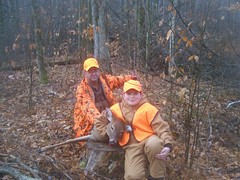
Very nice First deer taken on a first shot from a 12 year old. Congratulations. Pennsylvania, Opening Day 2006.

What a great memory for this young man and his father!!!!

Sunday, December 03, 2006

Western Hunting Expo

Due to unforseen scheduling I am not able to attend this event, though I really wish I had the opportunity to attend. It looks like a wonderful event that everyone who is able to travel to Salt Lake City, UT should attend. For one the opportunity to get a really great tag to hunt in Utah is available and second this event looks like it is going to have the cream of the crop as far as speakers, guests and exhibitors.


Link

Arizona Javalina Hunts

Anyone want to join me for a Javalina hunt this spring?

I think these would be a lot of fun to hunt.......


PHOENIX – Looking for a great holiday gift idea? There are still several thousand javelina hunt-permit tags available for the spring 2007 hunts on a first-come, first-served basis by U.S. mail only from the Arizona Game and Fish Department.

To find out what hunts have javelina tags available, visit azgfd.gov/draw or call (602) 789-3702. Keep in mind that each work day, the number of permits remaining can dwindle as applications are received and processed.

Department officials stressed that those who apply for the leftover tags need to pay attention to the new increased fees for licenses and tags for 2007 on page two of the spring hunt regulation supplement.

Those applying for the first-come, first-served process might also keep in mind that there are super new license deals available for 2007, including a new family license, a super conservation hunting license (includes various tags and stamps), and a super conservation combination hunt/fish license, which are available at department offices.

As a side note, don’t forget there is a change in the timing to apply for elk and antelope during the upcoming year: 2007 will be the first year the department conducts a winter draw, or lottery, for elk and antelope tags. The application deadline for elk and antelope is Feb. 13. Hunt permit-tags and refund warrants will be mailed out by April 27.

The department will begin accepting applications for elk and antelope as soon as the regulations are posted on the department’s Web site at azgfd.gov. That posting should occur by the end of December. The printed regulations should be available at hunting license dealers by Jan. 12.

Saturday, December 02, 2006

West Virginia Elk Seen!

Source of W.Va. elk herd a mystery
EXPERTS DOUBT ANIMALS MIGRATED FROM KENTUCKY
ASSOCIATED PRESS
CHARLESTON, W.Va. - At least one small herd of elk has been spotted in West Virginia's Logan and Boone counties, and wildlife officials are wondering how the animals got there.

"What makes us suspicious is that these elk suddenly seemed to appear all at once in a specific area," said Tom Dotson, district wildlife biologist for the state Division of Natural Resources. "We don't think they just wandered over the border from Kentucky."

The DNR has been getting reports of up to six elk together. Officials believe there to be as many as 11 elk in the area.

The first sighting occurred near Boone County's Wharton Grade School, where a young bull elk was seen trying to cross a nearby highway in mid-October. Since bowhunting seasons for deer and black bear began, more elk sightings have been reported.

Once abundant in the Eastern United States, elk disappeared as people proliferated throughout the region. Some states have reintroduced the large, antlered animals into the wild. In Kentucky, an estimated 5,700 elk have been put into a 16-county area along the West Virginia state line.

"We've had sightings of elk in Mingo and Wayne counties along the border, but up to now we've never had reports of any elk herds," Dotson said.

One of the latest sightings was by a clerk at Chief Logan State Park who spotted a lone bull elk standing near some railroad tracks while she was driving.

"I knew immediately that it was an elk," said Melissa Brown, who took pictures of the animal. "It was way too big to be a deer."

Dotson said the DNR is investigating reports of a truck pulling an elk-filled trailer into the Bald Knob area around the same time the sightings began.

"There are reports that a coal company might have had them brought in to improve the environment. There's also speculation that a hunting club might be behind the stocking. Whoever did it, if anyone did, they had to have had money, because elk aren't cheap," Dotson said.

In the past, sporting clubs had lobbied wildlife officials for a state-sanctioned elk-stocking program, but concerns about chronic wasting disease put the DNR's elk project on hold.

Friday, December 01, 2006

New East Coast Possible Record for a Non-Typical Whitetail


ANNAPOLIS — Deer hunters had a good start to the firearm season this year with an opening weekend harvest on par with last year and one hunter taking home the biggest non-typical whitetail ever harvested in Maryland.
Hunters unofficially harvested 17,231 deer during the opening weekend of the firearms season, 80 more than the unofficial number of 17,151 reported last year during the same period. The reported antlered harvest increased from 7,956 deer last year to 8,019 this year, while the antlerless harvest increased slightly from 9,195 to 9,212.

Sika deer comprised 143 of the antlered and 147 of the antlerless deer during opening weekend, making it comparable to the 133 antlered and 164 antlerless sika deer reported during last year’s opener.

Hunters tolerated fog and warm temperatures to harvest 2,529 deer on Sunday in the 14 counties that permit Sunday hunting, representing an increase of about 3% over last year’s Sunday total of 2,462. This year, Anne Arundel and Montgomery were added to the list of counties that permit Sunday hunting. Both of these counties experienced a significant increase (more than 15 percent) in the opening weekend deer harvest over last year.

“Sunday hunting is gradually catching on with our hunters,” said Doug Hotton, Department of Natural Resources’ Deer Project Leader. “This day is proving to be a viable option to increase harvest and balance our deer population with its environment and human neighbors.”

A new state record buck was taken by Bill Crutchfield, Jr. of Charles County near his home in Newburg, Maryland. Crutchfield watched the buck for approximately two hours mid-day Monday before finding an opportunity to take the massive deer with a single shotgun round.

Maryland DNR Wildlife & Heritage Service and Natural Resources Police personnel examined the buck on Tuesday. DNR staff confirmed that the buck has 26 scoreable points (13 per side) and a preliminary antler score of 268 5/8 inches. If approved by national scoring organizations, the buck will eclipse the current Maryland non-typical record by 40 inches, becoming the number one non-typical buck ever taken on the entire East Coast, and ranking among the top 20 all-time largest non-typical deer in the world.

Bob Beyer, associate director for game management, preliminarily scored the buck but official confirmation will not be possible until the antlers have met the minimum 60-day ‘drying’ period and an official score is taken. A deer’s antlers are classified as being typical when they are symmetrical and regular in shape. Non-typical antlers are those that have uneven or unusual tines, irregular points or outgrowths.

“For its size, Maryland has always been one of the top-producing trophy whitetail states,” said Paul Peditto, director of DNR’s Wildlife and Heritage Service. “Our hunters have kept our trophy status a well-guarded secret; I expect that will change now.”

Crutchfield’s buck weighed 150 pounds after field dressing and had a 22-inch inside spread and massive 25-inch main beams sporting more than 5 inches of circumference mass along each beam-length. The former non-typical record was taken in November 1987 by Jack Poole in Montgomery County during the firearms season and scored 228 4/8 inches.

Beyer, who measured the former non-typical record nearly 20 years ago added, “This new record buck is truly remarkable and is a perfect testament to the superb potential of Maryland’s deer management program and the quality of our state’s deer herd and habitat.”

Deer firearms season continues through December 9

Pa. hunters worry about loss of private land following verdict

Nov 27, 12:30 AM EST
Pa. hunters worry about loss of private land following verdict
By MICHAEL RUBINKAM
Associated Press
ALLENTOWN, Pa. (AP) -- As Pennsylvania's two-week rifle deer season gets under way Monday, some hunters, particularly in eastern Pennsylvania, say they no longer have access to their favorite stomping grounds because private landowners are worried about liability.
Farmers and other landowners have either restricted hunting, or banned it altogether, following a recent jury verdict in Lehigh County in which a landowner was found partly liable for the accidental shooting of a pregnant woman by a hunter.
Brian Dietrich, 42, who runs a dairy farm and raises corn, soybeans and alfalfa, said he plans to limit hunting this year to close friends and family. In the past, he would allow almost everyone who asked to hunt on his land in northern Lehigh County.
"I have too much at stake, and too much of an investment, to have it compromised," he said.
The clampdown stems from a lawsuit involving the near-fatal shooting of Casey Kantner, who was 18 when she was shot in the head as she sat in a car outside her home north of Allentown two years ago. Authorities say the shot was fired by a hunter from a 140-acre orchard near Kantner's house.
Kantner, who survived, sued both the hunter, Craig Wetzel, and the landowner, Daniel Haas, for negligence. Kantner won her lawsuit on Sept. 8, with a jury finding Wetzel 90 percent responsible for the shooting and Haas 10 percent responsible.
Although a second jury has yet to determine monetary damages, the verdict sent ripples through the hunting community.
Anthony Ezolt, 46, a lifelong hunter from Berks County, said he lost his "ace in the hole" hunting spot, a 171-acre farm where game was plentiful, after the landowner banned hunting.
"He almost felt guilty in telling me," Ezolt said. "What could I say? I really wish I could hunt, but I don't blame him. I would do exactly the same thing." Now Ezolt will have to content himself with hunting on state land, "where everybody else hunts."
Pennsylvania Game Commission spokesman Jerry Feaser said some people, fearing lawsuits, have dropped out of a state program that enrolls private landowners who permit the public to hunt on their land. Most of the participants in the 70-year-old program are farmers hoping to reduce crop damage caused by deer and other wildlife. The program covers nearly 4.4 million acres of private land - dwarfing state game lands, which comprise 1.4 million acres.
Although Feaser was unable to say how many landowners have pulled out, he said the game commission is concerned and wants people to keep their land open to hunters. "The benefits far outweigh the negatives," he said.
The verdict caught Pennsylvania's hunting and farm lobbies by surprise. For decades, they had relied on a 1966 state law that shields landowners who allow hunting from certain forms of liability. However, the law does not specifically mention accidents that happen on neighboring land, and it was not used as a defense at trial.
Now hunters and farmers are pressing the Legislature to beef up protection for landowners.
"The future of hunting on farmland in Pennsylvania could be in jeopardy if farmers are held responsible for the actions of those who hunt on their land," Carl Shaffer, president of the Pennsylvania Farm Bureau, said in a statement.
The House of Representatives passed a measure last week that would prevent landowners from being held responsible for the negligence of hunters on their land, even if someone off the property is harmed. But the bill died in the Senate because that chamber did not have enough time to consider it before the end of the legislative session. The measure is expected to be reintroduced early next year.
Until then, landowners are taking precautions.
David Jaindl, whose Lehigh County farm raises 750,000 turkeys a year, said he began restricting hunting on his land two years ago, partly for fear of liability. "The ruling certainly didn't help," he said. "Until that decision is changed, I think property owners will have a continuing concern."
The Kantner case comes at a time when Pennsylvania hunters are already complaining about deer management policies that they say have drastically reduced the size of the herd, and about the ongoing, seemingly inexorable loss of private hunting land to subdivisions, strip malls and other development.
Many hunters have simply given up: The number of licenses issued by the Game Commission declined by more than 25 percent between 1981 and 2005. Only 964,000 licenses were issued last year, a 40-year low.
"I have two junior hunters, and they don't expect much when they go deer hunting," said Ezolt, the hunter who lost his prime spot. "They don't get excited about going. I'm watching it slip away, and it's sad."

Pennsylvania Bear Harvest Impressive

Release #156-06
Nov. 29, 2006

HUNTERS POST IMPRESSIVE HARVEST
First-ever archery bear hunt results in a harvest of 73

HARRISBURG - Pennsylvania Game Commission bear check stations recorded
a preliminary harvest of 2,553 bears during the recently completed
three-day season, and an additional 73 bears during the state's
first-ever, two-day archery bear harvest.

The three-day season, held Nov. 20-22, preliminarily ranks as the
eighth highest statewide harvest. When adding the archery take, the
total preliminary harvest of 2,626 moves up to seventh place. However,
Mark Ternent, Game Commission bear biologist, noted that with the
extended bear season in certain Wildlife Management Units (WMUs) running
from Nov. 27 through Dec. 2, the total preliminary harvest is likely to
approach 3,000, which would put this year's combined bear harvest in
line with the previous five years' harvests.

"While this year's bear harvest, so far, pales in comparison to last
year's season, hunters still are on course to register a impressive
harvest," Ternent said. "So far, this looks to be a typical season for
bear hunters."

Last year, hunters set a record harvest of 3,331 bears during the
three-day season and, by the end of the extended season, had pushed the
record to 4,164. The combination of record license sales, high bear
population estimates, abundant fall foods and favorable weather
conditions aided in reaching that mark. Preliminary total bear harvest
figures - two-day archery, three-day statewide and six-day extended -
are expected by Dec. 6, but official total bear harvest figures for all
three seasons won't be available until early 2007.

A printing error in the 2006-2007 Pennsylvania Hunting and Trapping
Digest incorrectly lists on a detachable pull-out card found between
pages 28 and 29 that the extended bear season (Nov. 27-Dec. 2) is open
in WMU 4C. The extended bear season is not open in WMU 4C.

Bear licenses had to have been purchased prior to the start of the
two-week rifle deer season on Nov. 27.

The top ten bears processed at check stations for the three-day bear
season all had estimated live weights that exceeded 600 pounds. The
largest was a 693-pound male taken by John D. Eppinette of Adamstown, in
West Branch Township, Potter County, at 3:30 p.m. on Nov. 20.

Other large bears taken during the three-day season were: a 677-pound
male taken by Donald L. Stear of Sagamore, in South Mahoning Township,
Indiana County, at 7:15 a.m. on Nov. 20; a 661-pound male taken by
Samuel I. Fisher of Loysville, in Southwest Madison Township, Perry
County, at 8:49 a.m. on Nov. 20; a 649-pound male taken by Leon L.
Bonczewski of Glen Lyon, in Newport Township, Luzerne County, at 9:30
a.m. on Nov. 20; a 622-pound male taken by Rick A. Warfel of Lancaster,
in Cummings Township, Lycoming County, at 8 a.m. on Nov. 20; a 621-pound
male by Steven J. Craig of Montgomery, in Shrewsbury Township, Lycoming
County, 9:30 a.m. on Nov. 20; a 621-pound male taken by Jonathan E. Kio
of Ulysses, in Allegany Township, Potter County, 3:15 p.m. on Nov. 20; a
607, Clinton County, 9:15 a.m. on Nov. 20; a 604-pound male taken
by J.E. Allgyer of Kinzers, in Burnside Township, Centre County, at 7:12
a.m. on Nov. 20; and a 601-pound male taken by Andrew M. Miller of Mill
Hall, in Greene Township, Clinton County, at 7:10 a.m. on Nov. 20.

The preliminary three-day bear harvest by Wildlife Management Unit was
as follows: WMU 1A, 12 (9 in 2005); WMU 1B, 37 (37); WMU 2C, 253 (308);
WMU 2D, 98 (127); WMU 2E, 97 (114); WMU 2F, 203 (258); WMU 2G, 680
(900); WMU 3A, 225 (284); WMU 3B, 208 (288); WMU 3C, 90 (115); WMU 3D,
120 (237); WMU 4A, 114 (147); WMU 4B, 32 (41); WMU 4C, 69 (104); WMU 4D,
281 (297); and > WMU 4E, 34 (60).

The top five bear harvest counties in the state's three-day season
continue to hail from the Northcentral Region. The leading county was
Clinton with 213, followed by Lycoming, 196; Potter, 180; Tioga, 142;
and Clearfield, 130.

County harvests by region for the three-day season, followed by the
three-day 2005 preliminary harvests in parentheses, are:

Northwest: Warren, 78 (78); Forest, 46 (67); Venango, 42 (38);
Clarion, 36 (30); Jefferson, 28 (62); Butler, 10 (10); Crawford, 5 (10);
Erie, 2 (0); and Mercer, 2 (4).

Southwest: Somerset, 122 (108); Fayette, 59 (73); Indiana, 46 (65);
Armstrong, 31 (33); Westmoreland, 22 (44); and Cambria, 13 (30).

Northcentral: Clinton, 213 (227); Lycoming, 196 (238); Potter 180
(211); Tioga, 142 (217); Clearfield, 130 (157); McKean, 129 (146);
Centre, 92 (138); Elk, 83 (109); Cameron, 67 (170); and Union, 40 (33).

Southcentral: Huntingdon, 95 (127); Bedford, 72 (94); Mifflin, 42
(29); Blair, 36 (44); Fulton, 16 (21); Snyder, 15 (11); Juniata, 14
(11); Perry, 8 (7); Franklin, 4 (6); and Cumberland, 1 (0).

Northeast: Sullivan, 67 (80); Wayne, 56 (74); Pike, 48 (94); Luzerne,
46 (75); Susquehanna, 38 (53); Bradford, 33 (55); Monroe, 30 (69);
Wyoming, 24 (24); Carbon, 21 (50); Columbia, 17 (36); Lackawanna, 13
(18); and Northumberland, 4 (2).

Southeast: Schuylkill, 14 (28); Dauphin, 13 (14); Lebanon, 8 (4); and
Berks, 4 (4).

The largest bear harvested during the two-day archery season was a
458-pound male taken by Christian Landis of Lancaster, in Cogan House,
Lycoming County, at 8:25 a.m. on Nov. 15. Other large bears included: a
457-pound male taken by Michael Rapsky of Cairnbrook, in Shade Township,
Somerset County, at 4 p.m. on Nov. 16; and a 407-pound male taken by
Shane Emel of Mill Hall, in Bald Eagle Township, Clinton County, at 4:30
p.m. on Nov. 15.

The two-day archery season harvest by WMU was: WMU 2C, 9; WMU 2D, 3;
WMU 2E, 2; WMU 2F, 2; WMU 2G, 32; WMU 3A, 8; WMU 4A, 2; and WMU 4D, 15.

County harvests for the two-day archery season by region was:

Northwest: Butler, 2; Venango, 1; and Warren, 1.

Southwest: Indiana, 4; Fayette, 3; Cambria, 1; and Somerset, 1.

Northcentral: Clinton, 12; Centre, 8; Potter, 7; McKean, 5; Tioga, 5;
Clearfield, 4; Elk, 3; Lycoming, 3; Union, 3; and Cameron, 1.

Southcentral: Huntingdon, 4; Blair, 2; Mifflin, 2; and Fulton, 1.

Created in 1895 as an independent state agency, the Game Commission is
responsible for conserving and managing all wild birds and mammals in
the Commonwealth, establishing hunting seasons and bag limits, enforcing
hunting and trapping laws, and managing habitat on the 1.4 million acres
of State Game Lands it has purchased over the years with hunting and
furtaking license dollars to safeguard wildlife habitat. The agency
also conducts numerous wildlife conservation programs for schools, civic
organizations and sportsmen's clubs.

The Game Commission does not receive any general state taxpayer
dollars for its annual operating budget. The agency is funded by
license sales revenues; the state's share of the federal
Pittman-Robertson program, which is an excise tax collected through the
sale of sporting arms and ammunition; and monies from the sale of oil,
gas, coal, timber and minerals derived from State Game Lands.